

Nor Effendi Md NorMunirah Mohammad

Read the site before the brand says no.

A 261-page, Malaysia-focused field guide to the traffic, access, drive-thru, parking and trade-area checks behind QSR site decisions—drawn from more than 30 years inside the industry.

Physical book English · Launching soon

Send Me Launch Details
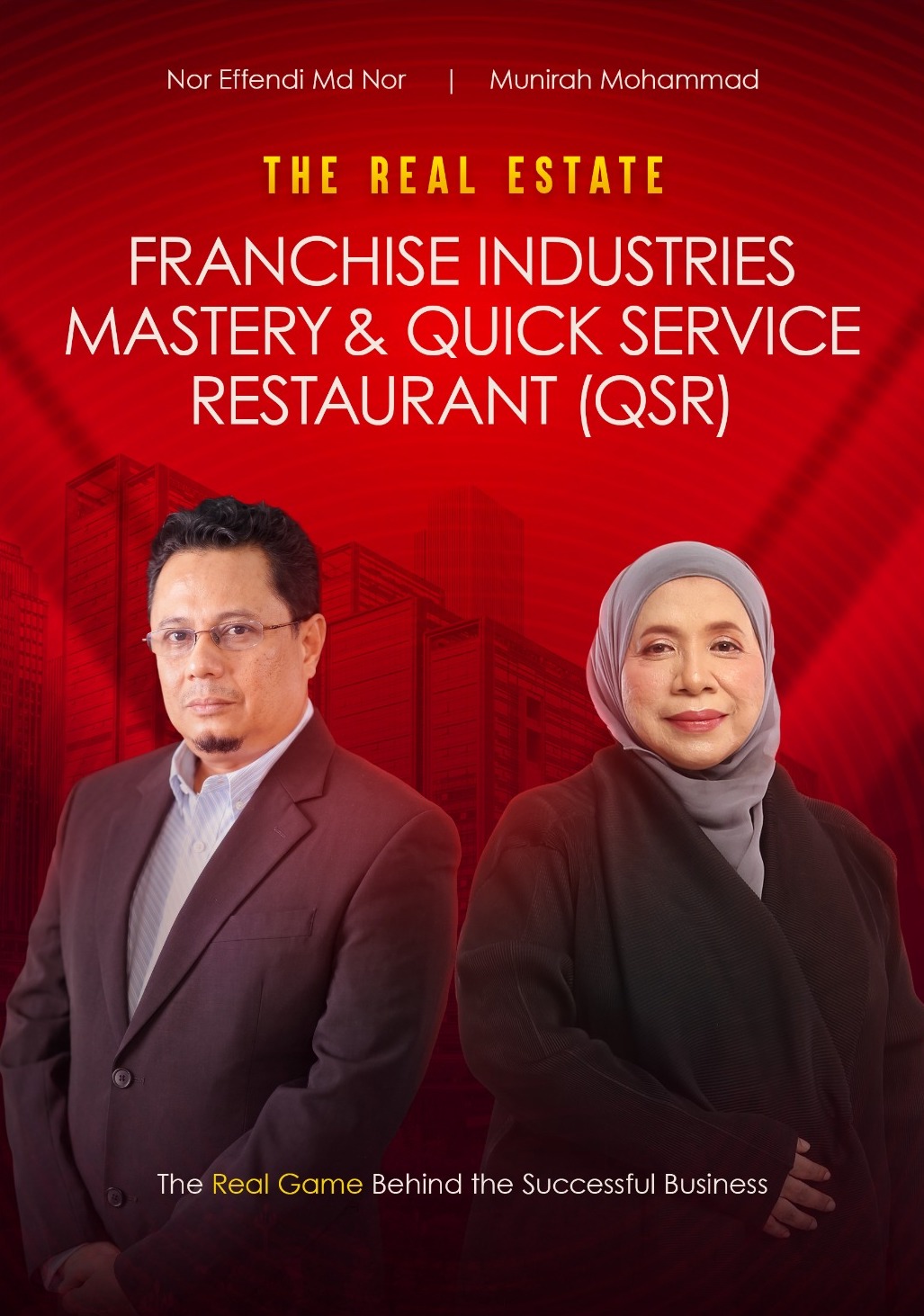
Cover of The Real Estate Franchise Industries Mastery and Quick Service Restaurant by Nor Effendi Md Nor and Munirah Mohammad

Brands don't buy land.They buy customer flow.

A plot can look prime on paper and still fail in motion. Before rent or fit-out enters the conversation, the site has to pass five practical tests.

The brand-side site screen

  1. 01Seen before the turnThe pylon must be readable before a driver commits to the junction.
  2. 02Easy in, easy outAccess should meet traffic where vehicles already slow, without forcing a risky move.
  3. 03Queue without conflictA drive-thru needs room to stack 10–15 cars without blocking entry or parking.
  4. 04Built for throughputWhen drive-thru can carry about 60% of sales, lane flow becomes a revenue decision.
  5. 05Parking that stays usableFor a typical McDonald's drive-thru site, 25–40 bays must stay clear of the lane.

The first question is not “Is this land available?” It is “Can this site perform every day?”The A+ site test · Page 71

Sales is the summit.Location is the ground.

Skip the foundation and every tactic above it has to work harder. Build visibility and access first; promotion, market knowledge, community relevance and repeat sales compound from there.

  1. 1

    Win visibility and access

    Can customers see you early enough and enter without hesitation?

  2. 2

    Turn promotion into visits

    A campaign only works when the site can absorb the demand it creates.

  3. 3

    Read the trading area

    Map demand, competitors, catchment gaps and the next pocket of growth.

  4. 4

    Stay relevant locally

    Build around the routines of families, offices, businesses and communities.

  5. 5

    Grow local sales

    Then increase repeat visits, average spend and new-customer reach.

Not another opinion.261 pages of decisions.

Move from first screen to final approval with site types, evaluation criteria, measured plans, operating frameworks and the risks that can stop a deal.

  • Why QSR concepts succeed or fail
  • How location creates demand
  • How brands investigate and approve sites
  • How a signed site becomes an outlet
  • When the next outlet is earned

Plus a site-evaluation checklist, glossary, index and practical risk checks.

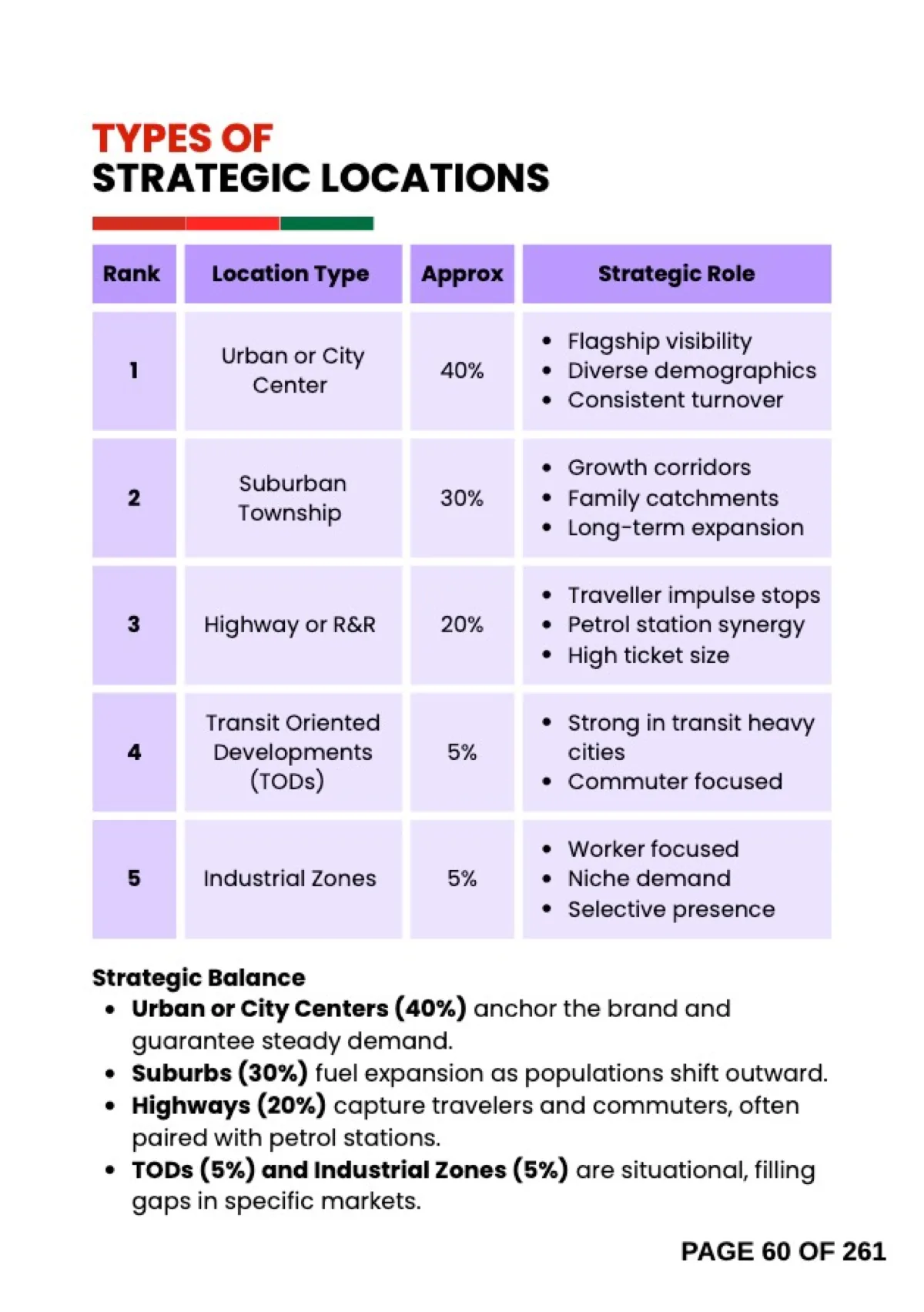
Book page ranking five strategic location types and the share of a drive-thru portfolio each should hold
Page 60 of 261Build the right location mix
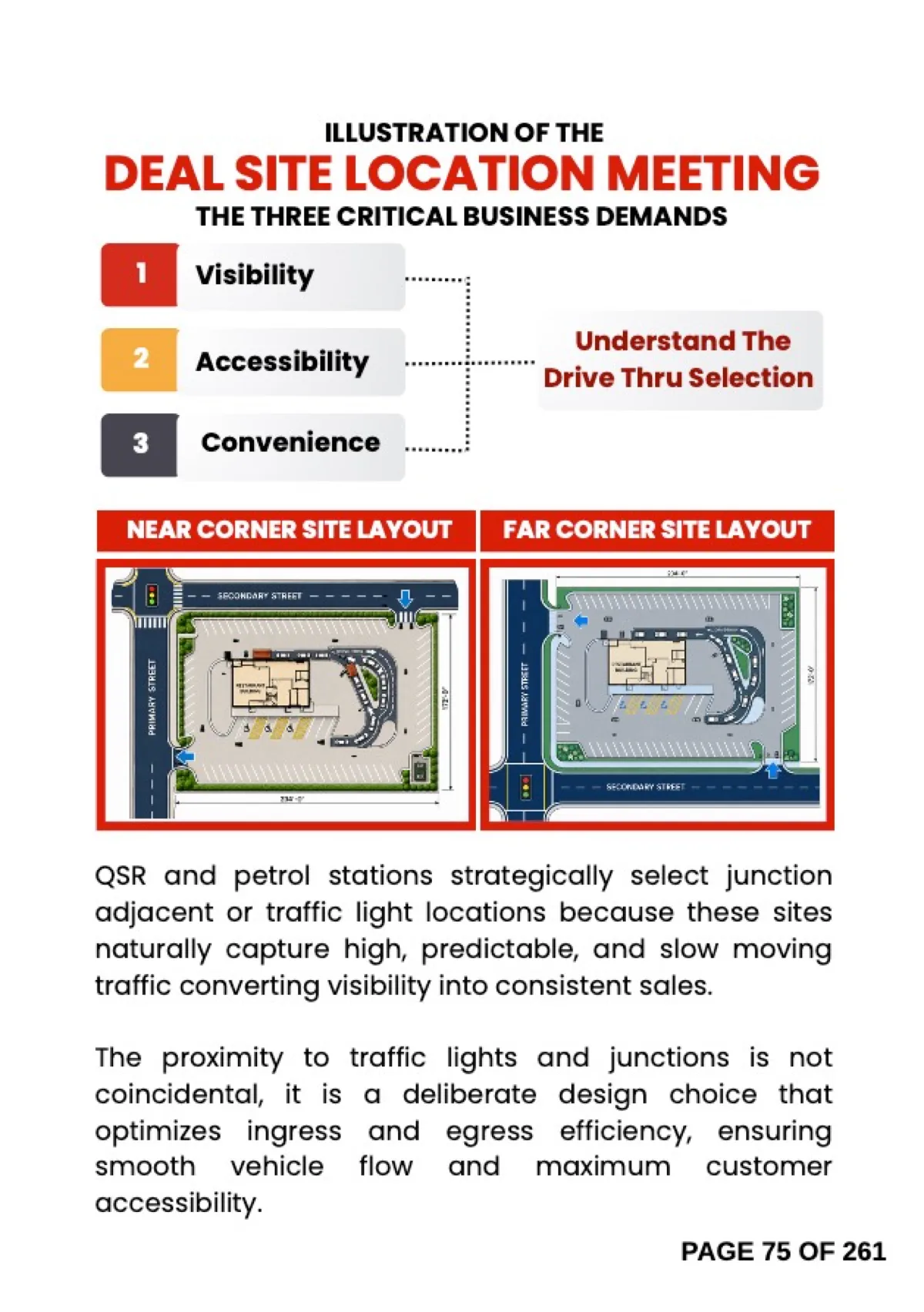
Book page comparing a near corner and a far corner site layout against visibility, accessibility and convenience
Page 75 of 261Compare near and far corners
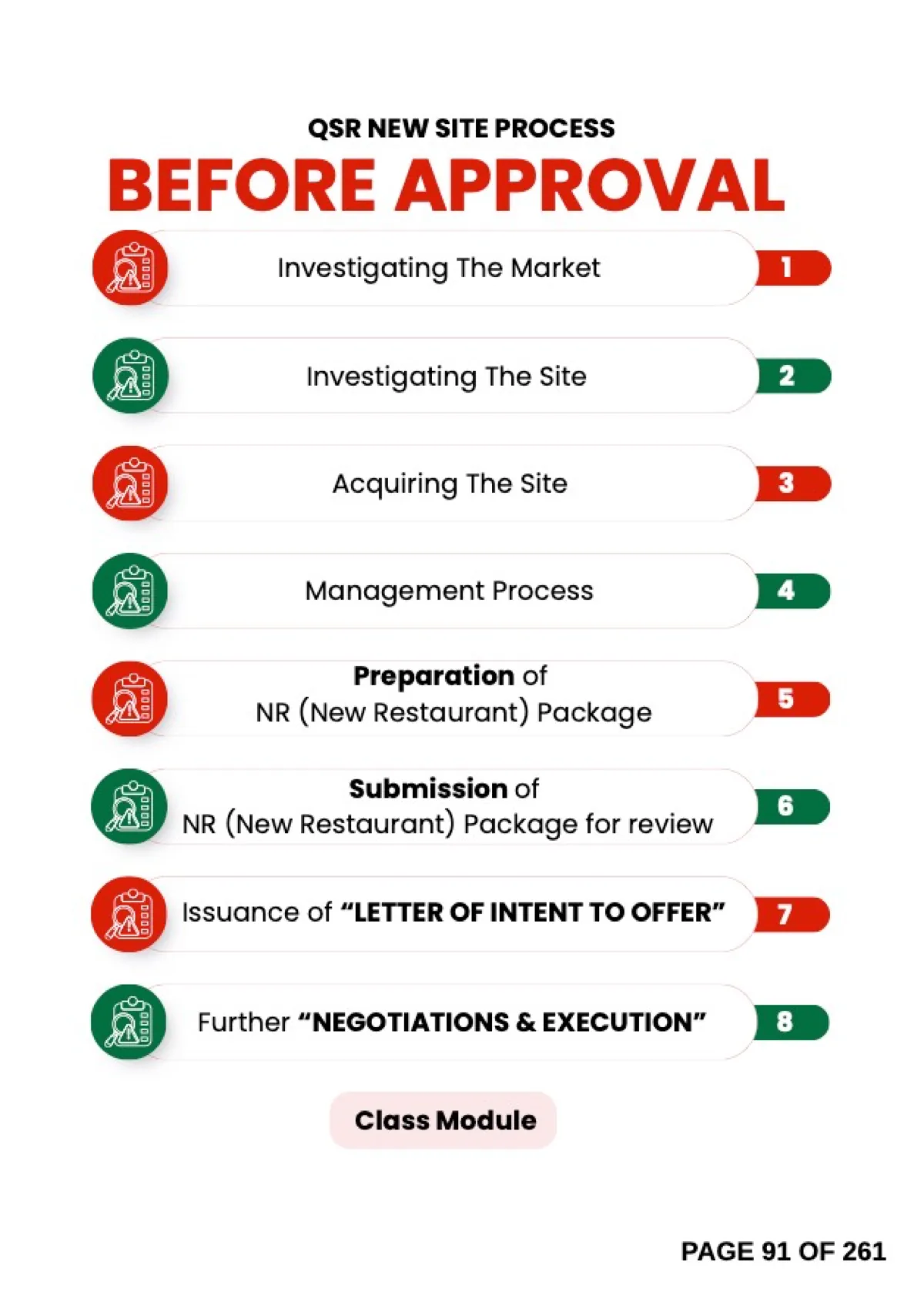
Book page listing the eight steps a new QSR site passes through before approval, from investigating the market to negotiations and execution
Page 91 of 261Eight gates before approval
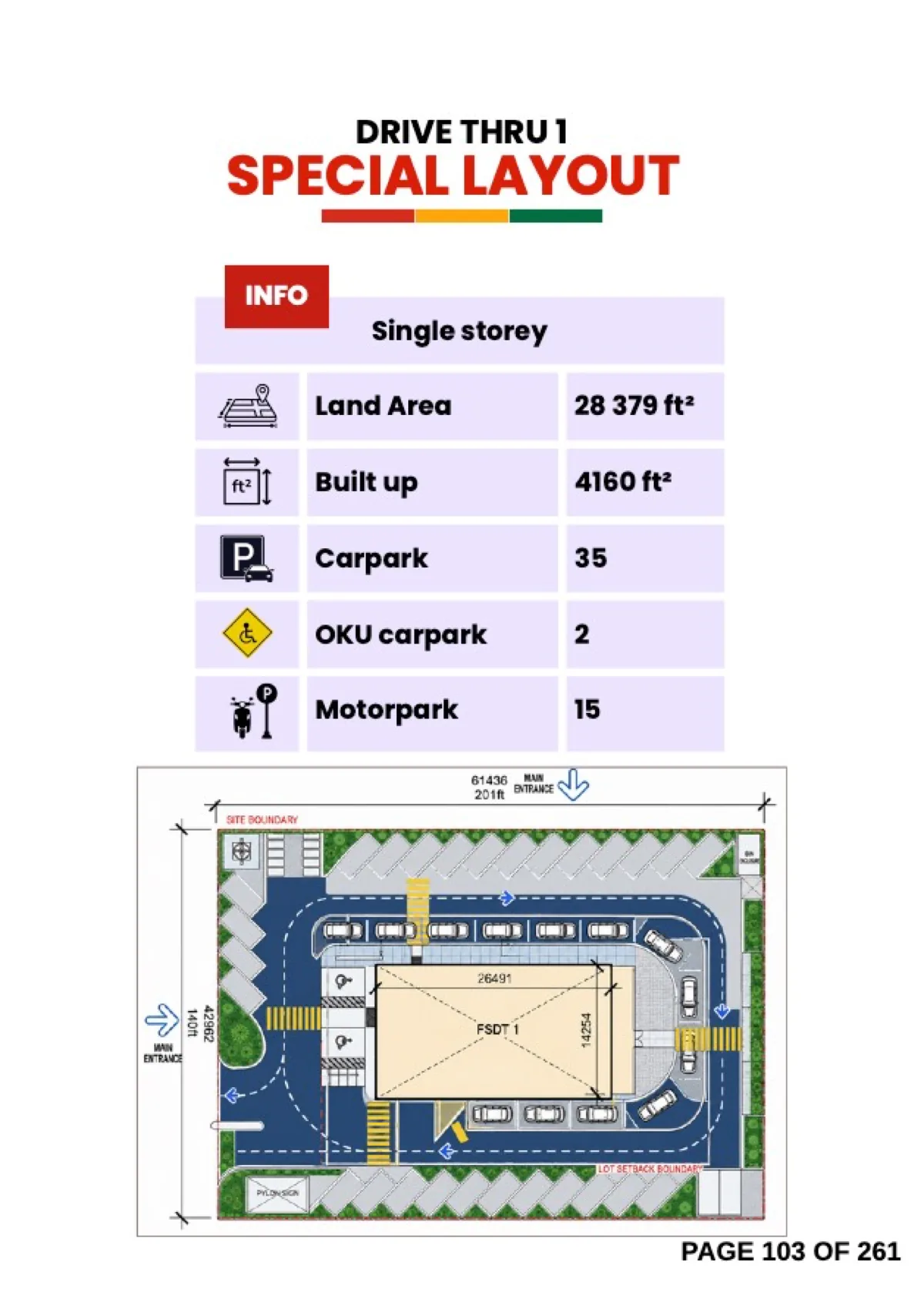
Book page with a measured drive-thru site plan: 28,379 square feet of land, 4,160 square feet built up, 35 car park bays
Page 103 of 261Test a measured drive-thru site
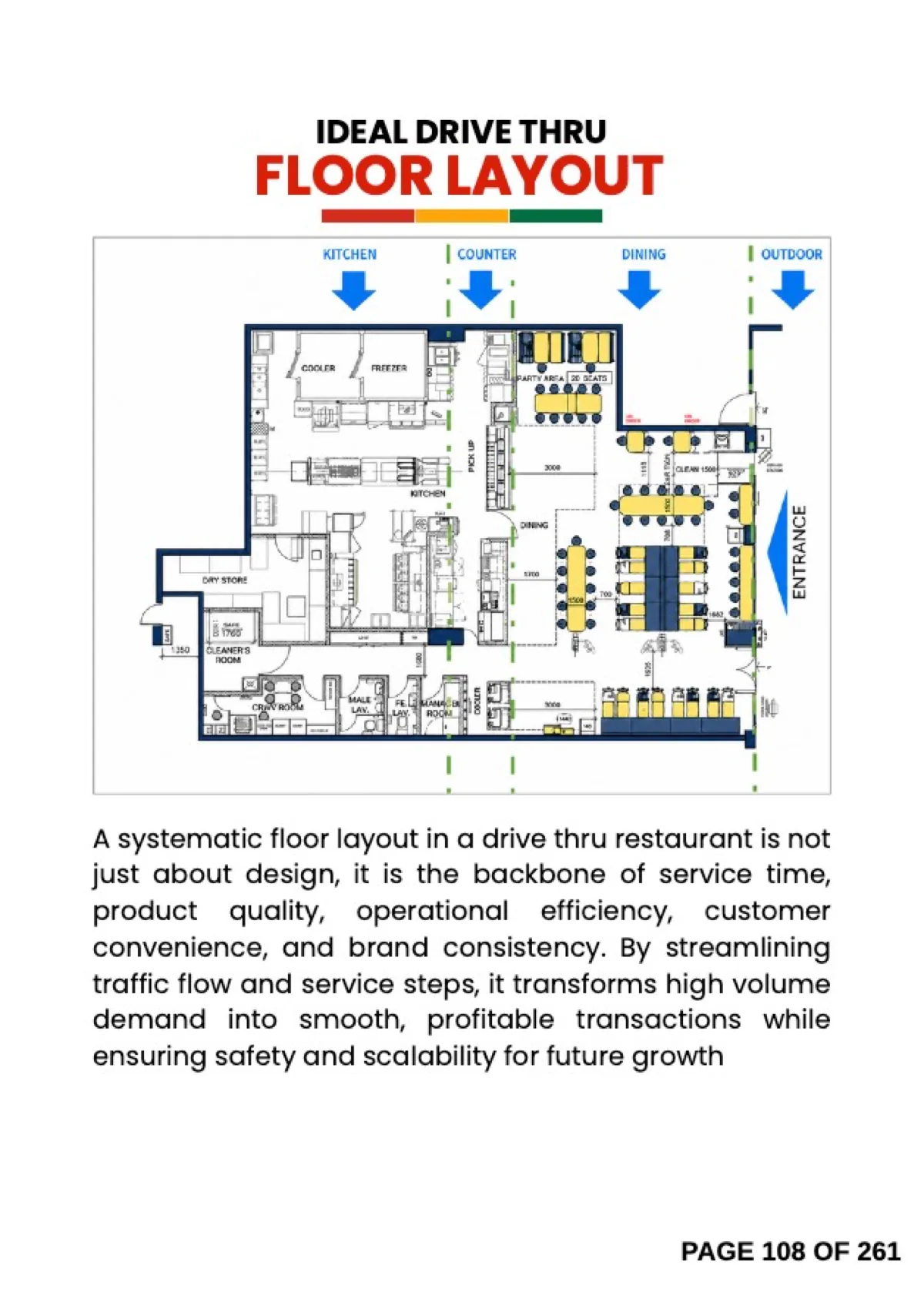
Book page with the ideal drive-thru floor layout, marked from kitchen through counter to dining and outdoor
Page 108 of 261Connect layout to throughput

One brand.Five demand patterns.

A stronger portfolio does not repeat the same location bet. It spreads exposure across daily city traffic, family catchments, highway stops, commuters and focused worker demand.

  • 40%
  • 30%
  • 20%
  • 5%
  • 5%
40%Urban & city centres
Flagship visibility, varied demand and consistent turnover.
30%Suburban townships
Family catchments, growth corridors and room to expand.
20%Highway & R&R
Traveller impulses, petrol-station synergy and higher tickets.
5%Transit developments
Dense commuter demand in transit-heavy locations.
5%Industrial zones
Focused worker demand and selective network coverage.

Illustrative, industry-informed benchmark from page 59. It is not an official published breakdown from any individual brand.

One site decision.Different stakes.

Whether you own the land, pitch the location or operate the outlet, the same evidence decides whether the opportunity moves forward.

  • Property developers

    Plan sites brands can actually use, not residual plots they will reject.

  • Investors

    Separate visible activity from durable location economics.

  • Real estate agents

    Present sites with the evidence brand acquisition teams expect.

  • F&B entrepreneurs

    Test demand and access before fit-out money is committed.

  • New investors

    Know what to verify before a promising address becomes an expensive lesson.

  • Franchise operators

    Build a repeatable site-selection discipline for every new outlet.

  • Landowners

    Package frontage, access, utilities and catchment into a stronger tenant pitch.

Field experience.Put on the page.

One author brings the brand-side QSR development lens. The other brings decades of Malaysian real estate practice. The book is where those two views meet.

Nor Effendi Md Nor

Nor Effendi Md Nor

More than 30 years in QSR development

  • Director of Development & Real Estate, McDonald's Malaysia.
  • Development and real estate roles across QSR Brand Malaysia, the operator behind KFC and Pizza Hut.
  • Managing Director, Urban Streat Ventures Sdn Bhd, Manila.
  • Trained at McDonald's University, Oak Brook, Illinois, and the YUM! University Asia development college.
  • Experience spanning site acquisition, lease negotiation, drive-thru development orders and government covenant affairs.

Munirah Mohammad

Munirah Mohammad

Malaysian real estate practice since 1989

  • Licensed estate agent, E 1469.
  • Founded Homefield in 1995; Co-Founder and Group Managing Director.
  • Appointed BOVAEA examiner, and a MAREC speaker every year since 2017.
  • NREA Agent of the Year 2022, among awards received from 2016 to 2024.
  • Author of Industrial Property Fundamental.

Questions,answered.

When can I order it?

The book is launching soon. Join the WhatsApp launch list and we will send you the confirmed price and ship date when they are ready.

What will this help me decide?

How to screen, compare, present and negotiate a QSR or franchise location using traffic, access, catchment, layout, parking, utilities and operating feasibility.

Is it focused on Malaysia?

Yes. The market examples, site context, licensing requirements and approval considerations are Malaysian.

Is it only for restaurant operators?

No. It is written for both sides of the deal: developers and landowners with a site, and agents, investors and operators evaluating one.

Does it include practical tools?

Yes. It includes site-evaluation criteria, approval steps, measured plans, operating frameworks, a glossary, an index and a risk checklist.

What format and language is it?

A 261-page physical book in English, published by Homefield Academy Sdn Bhd.

Cover of The Real Estate Franchise Industries Mastery and Quick Service Restaurant

Franchise IndustriesMastery & QSR

The site-selection logic behind successful franchise locations.

Format
261 pages · English · Physical book
Authors
Nor Effendi Md Nor · Munirah Mohammad
Publisher
Homefield Academy Sdn Bhd
Status
Launching soon

Get the details before launch.

Send one WhatsApp message. We will reply with the confirmed price and ship date when both are ready.

Send Me Launch Details

Physical book

Get Launch Details